
Most classic car owners assume that newer, more advanced motor oil is always the better choice for their vintage engine. That assumption can quietly destroy the very components you’re trying to protect. Modern oils show accelerated wear in pre-1990 motors at just 3,000 miles, largely because today’s formulations have stripped out a critical additive that older engines depend on. This guide covers exactly what high zinc motor oil is, why the industry moved away from it, when your classic car truly needs it, and how to pick the right product without guessing.
Table of Contents
- What is high zinc motor oil?
- Why did zinc levels change in modern oils?
- When and why should you use high zinc oil?
- Choosing the best high zinc oil for your classic car
- A fresh perspective: Does every classic car need high zinc oil?
- Find the right high zinc oil for your classic car
- Frequently asked questions
Key Takeaways
| Point | Details |
|---|---|
| Flat-tappet classics need zinc | Vintage engines with flat-tappet cams require high zinc oil for optimal protection. |
| Modern oils lack ZDDP | Most current oils have too little zinc to safeguard classic car parts effectively. |
| Not all high zinc oils are equal | Check oil brand labels for proper ZDDP content and balanced additives before purchase. |
| Follow break-in and maintenance protocols | Use higher zinc content for engine break-in, then stay within safe daily limits. |
What is high zinc motor oil?
High zinc motor oil is a lubricant formulated with elevated levels of zinc dialkyldithiophosphate, commonly called ZDDP. Think of ZDDP as a chemical bodyguard for your engine’s metal surfaces. It sits between moving parts and activates under heat and pressure, forming a protective barrier before metal can grind against metal.
ZDDP forms a sacrificial film that prevents metal-to-metal contact under the extreme heat and pressure found inside a working engine. The word “sacrificial” is key here. The ZDDP compound breaks down intentionally so your camshaft and lifters don’t have to. It’s a chemical trade-off that classic engine designers relied on, even if they didn’t always call it by that name.
The numbers tell the real story. High zinc oil contains 1200 to 1400 ppm of zinc and phosphorus, compared to 800 ppm or less in most modern oils. That gap might sound small, but at the cam-to-lifter contact point, where pressure can exceed 100,000 psi, that difference is the line between a healthy engine and a worn-out one.
Here’s why this matters so much for classic cars specifically:
- Flat-tappet camshafts were the industry standard before the mid-1980s. These designs create intense sliding friction between the cam lobe and the lifter face, far more than modern roller-style setups.
- Tighter tolerances and softer metals in older engines mean the metal surfaces are more vulnerable to wear without a strong chemical film layer.
- No roller lifters means there’s no mechanical advantage reducing friction. ZDDP is doing the heavy lifting.
- Break-in periods for rebuilt classic engines are especially critical, since fresh metal surfaces need maximum protection during the first few hundred miles.
For anyone running a motor oil for vintage engines, understanding ZDDP isn’t optional. It’s the foundation of keeping your engine alive.
Pro Tip: If your classic car was built before 1988 and has not been converted to a roller cam setup, assume it needs high zinc oil. Don’t wait for wear symptoms to confirm it.
Why did zinc levels change in modern oils?
The shift away from ZDDP wasn’t an accident or an oversight. It was a deliberate industry response to a very real problem, just not a problem that affects your 1982 classic.
The driving force was the catalytic converter. As emissions regulations tightened through the 1990s and 2000s, engineers discovered that phosphorus, the companion element to zinc in ZDDP, was poisoning catalytic converters over time. Phosphorus coats the catalyst material inside the converter, reducing its ability to clean exhaust gases. For automakers trying to meet tightening federal emissions standards, this was a serious issue.
The API (American Petroleum Institute) responded by progressively reducing the allowable ZDDP levels in licensed motor oils:
| API rating | Year introduced | Max ZDDP level |
|---|---|---|
| Pre-SG | Before 1996 | Unlimited |
| SH/SJ | 1996 | Capped at ~1000 ppm |
| SM | 2004 | Reduced to ~800 ppm |
| SN/SP | 2010 onward | Maintained at ~800 ppm |
API changes reduced ZDDP from unlimited before 1996, down to 1000 ppm in 1996, and further to 800 ppm by 2004, specifically to protect catalytic converters in modern vehicles.
For a 2020 truck engine with roller lifters and a catalytic converter, this is fine. For a 1982 Oldsmobile with a flat-tappet cam and no emissions equipment, it’s a problem.
“The oils that protect modern engines were designed around modern engine architecture. Using them in a classic flat-tappet engine is like wearing running shoes to a construction site. They’re great shoes, just wrong for the job.”
The result is that most oils sitting on the shelf at your local auto parts store are formulated for cars that don’t look or work anything like your classic. The API SM, SN, and SP ratings you see on modern oil jugs signal lower ZDDP, which is exactly what you want to avoid.
Pro Tip: Always check the API rating on the back of the oil bottle before buying. SM, SN, or SP ratings mean reduced zinc. Look for oils specifically labeled for classic or racing applications, or check the product data sheet for actual ppm values.
For owners of vehicles like the oil options for 1982 Lincoln Mark VI, this history explains why you can’t just grab whatever’s on sale at the parts store.
When and why should you use high zinc oil?
Understanding the causes is key, but when is high zinc oil actually necessary for your vehicle?
The most critical factor is your camshaft type. Flat-tappet cams, which were standard on virtually all American and European engines built before the mid-1980s, require high zinc protection. Roller cams, which became common after 1985, use a rolling contact that dramatically reduces friction at the cam-lifter interface. For roller cam engines, high zinc oil is largely unnecessary and can even be wasteful.
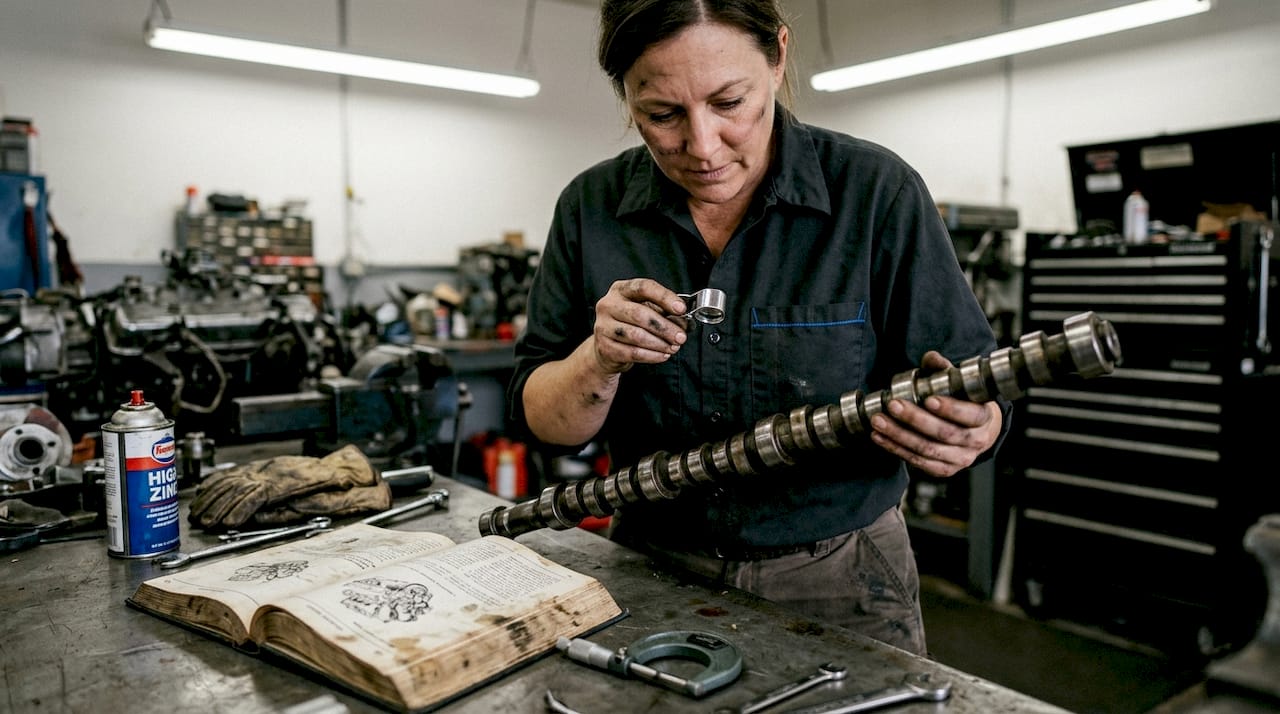
Here’s a practical breakdown of when ZDDP levels matter most:
| Scenario | Recommended ZDDP level |
|---|---|
| Daily driving, flat-tappet engine | 1000 to 1200 ppm |
| Engine break-in (first 500 miles) | Up to 1400 ppm |
| Roller cam engine | Standard modern oil is fine |
| Long-term storage | Moderate ZDDP helps prevent rust |
| Over 1500 ppm (any scenario) | Risk of sludge and corrosion |
Recommended ZDDP levels run 1000 to 1200 ppm for daily use, up to 1400 ppm for break-in periods, and anything over 1500 ppm risks sludge buildup and internal corrosion.
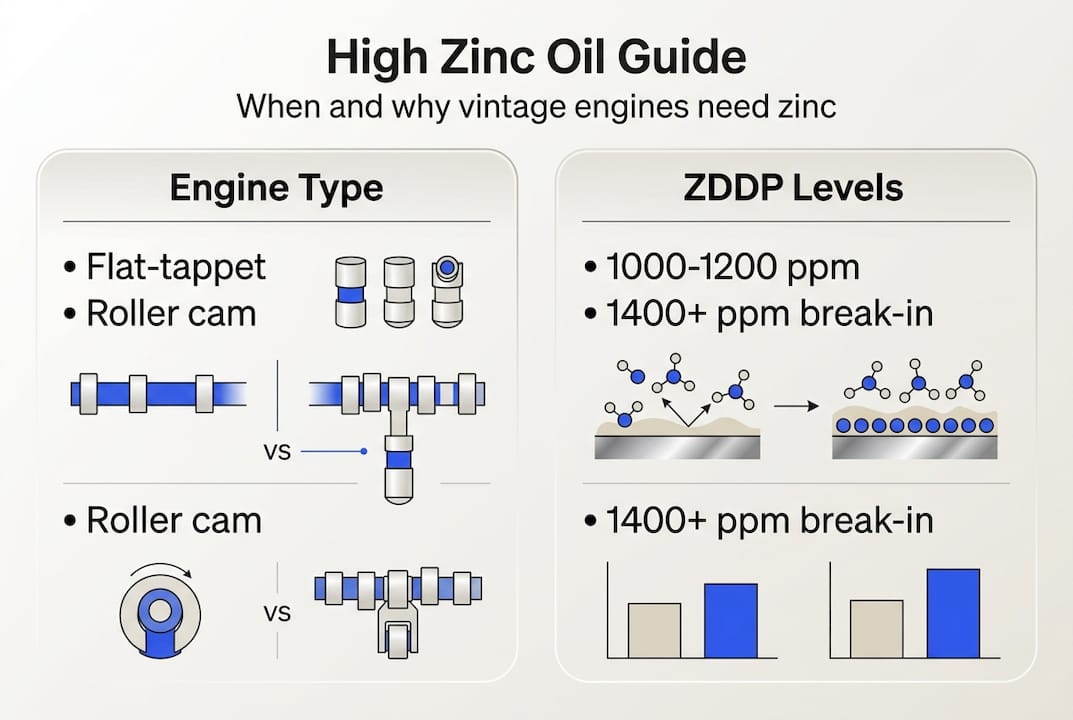
There’s also a storage angle most people overlook. ZDDP has mild anti-corrosion properties, which makes high zinc oil a smart choice if you’re putting your classic away for the winter. It helps protect cylinder walls and other internal surfaces from moisture-related rust during long idle periods.
For motor oil for 1982 Jaguar XJS owners and similar European classics, the flat-tappet rule applies just as strongly as it does for American iron.
How to check if your engine needs high zinc oil:
- Identify your engine’s cam type. Check the factory service manual or search your engine code online.
- Confirm whether your vehicle has a catalytic converter. Pre-1975 American cars generally did not.
- Look up the API rating on your current oil. SM, SN, or SP means low zinc.
- If you’re rebuilding or breaking in an engine, plan for higher ZDDP during the first 500 miles.
- When in doubt, pull a used oil sample and send it to an analysis lab for a baseline wear metals reading.
Flat-tappet engines need high zinc; roller cam engines and emissions-equipped vehicles do not, which is the clearest way to frame the decision.
Choosing the best high zinc oil for your classic car
Knowing when and why to use high zinc oil sets the stage for choosing the right product for your classic engine.
Not all high zinc oils are created equal. The market has a handful of brands that consistently deliver verified ZDDP levels and quality formulations for classic and performance applications. Top brands include Valvoline VR1, Amsoil Z-Rod, Lucas Hot Rod, Driven HR, and Brad Penn, each of which is formulated specifically for engines that need elevated zinc and phosphorus levels.
Here’s what to look for when evaluating any product:
- Actual ppm on the TDS (Technical Data Sheet). Don’t trust marketing language. Pull the product data sheet and look for the specific zinc and phosphorus ppm values.
- Viscosity match. Most early 1980s engines were designed for 10W-30 or 10W-40. Using the wrong viscosity can reduce oil film thickness regardless of ZDDP content.
- Detergent balance. Some racing-focused high zinc oils are low-detergent formulas designed for short drain intervals. For a street-driven classic, you want a balanced detergent package to keep the engine clean over longer service intervals.
- Avoid zinc additives as a crutch. Pouring a ZDDP additive into a modern low-zinc oil can work, but you lose control over the final ppm and risk overshooting into the sludge zone.
Check the TDS for actual ppm values and match viscosity and detergent balance to your specific engine’s needs rather than relying on the front-label claims alone.
For owners researching motor oil for 1982 Ford F100 Pickup engines or looking at the best oil for 1982 Buick Regal 4.4L, the same criteria apply: verify ppm, match viscosity, and choose a formula designed for street use rather than pure racing.
A fresh perspective: Does every classic car need high zinc oil?
Conventional wisdom in the classic car community treats high zinc oil as a universal requirement for anything old. That’s not entirely accurate, and following it blindly can lead you to spend money on protection your engine doesn’t need.
Recent testing has produced some genuinely surprising results. Modern API SP oils with balanced additives can actually outperform high-ZDDP-only formulas in flat-tappet wear testing, because total additive chemistry matters more than any single ingredient.
ZDDP is not a magic number. It’s one variable in a complex formula. An oil with 1400 ppm zinc and a poorly balanced additive package can perform worse than a well-engineered modern oil with 900 ppm and superior friction modifiers and anti-wear chemistry working together.
Our take at best oil for classic engines: use high zinc oil as your default for flat-tappet classics, but don’t ignore the full picture. If you’re serious about your engine’s long-term health, invest in periodic oil analysis. A lab report showing your actual wear metals over time is worth more than any single oil recommendation. It tells you whether your current oil is actually protecting your engine, regardless of what the label says.
Find the right high zinc oil for your classic car
You now know why high zinc oil matters, when to use it, and how to evaluate your options without falling for marketing claims. The next step is matching that knowledge to your specific vehicle.
At greatmotoroil.com, we break down the best oil choices by make, model, and engine type so you’re never guessing. Whether you’re maintaining best fluids for 1982 Corvette or looking for the recommended oil for 1982 Lincoln Town Car, we have vehicle-specific guidance ready for you. Browse all classic car oils to find exactly what your engine needs, backed by real specs and verified ppm data.
Frequently asked questions
How much zinc should be in oil for classic cars?
For daily-driving vintage engines with flat-tappet cams, aim for 1000 to 1200 ppm ZDDP during normal use, and up to 1400 ppm for the first 500 miles after a rebuild or break-in period.
Can too much zinc in oil cause problems?
Yes, ZDDP over 1500 ppm can cause sludge buildup, deposits, and internal corrosion, so staying within the recommended range for your engine type is essential.
Is high zinc oil safe for cars with catalytic converters?
High zinc oil can shorten catalytic converter life because phosphorus coats the catalyst material. The 2004 SM spec reduced zinc to 800 ppm specifically to protect converters, so use high zinc formulas only in non-emissions-equipped classic engines.
What is the difference between flat-tappet and roller cam engines?
Flat-tappet cams create intense sliding friction at the cam-lifter contact point and need high zinc protection. Roller cams don’t need high zinc because the rolling contact dramatically reduces wear at that interface.
Recommended
- Best motor oil for 1982 Ford Bronco 5.0L – The best synthetic oil for vehicle maintenance
- Best motor oil for 1982 Jaguar XJS 5.3L – The best synthetic oil for vehicle maintenance
- Best motor oil for 1982 Ford Granada 3.3L – The best synthetic oil for vehicle maintenance
- Best motor oil for 1982 Ford Mustang 5.0L – The best synthetic oil for vehicle maintenance